What Happens if an EMP Hits? How it Impacts Daily Life
A large electromagnetic pulse (EMP)—a sudden burst of electromagnetic radiation—can interfere with electronics and damage parts of the electrical grid. These events may be caused by a high altitude nuclear explosion or by powerful solar activity interacting with Earth’s magnetic field.
Modern life depends on electricity. Our homes, vehicles, communications, and food systems all rely on a vast network of electronic devices, power lines, and connected electronic systems. Most of the time this infrastructure works reliably in the background.
But certain rare events can disrupt that system in seconds.
In this guide we’ll look at:
- What an electromagnetic pulse is
- How it might affect daily life
- What past EMP events tell us
- How to prepare for power disruptions caused by EMP events
Latest Information : :
Preparedness isn’t about panic. It’s about understanding risks and planning practical solutions.
The 1994 Northridge earthquake affected Greater Los Angeles, California, United States, on January 17, 1994, at 04:30:55 PST. The epicenter of the moment magnitude 6.7 (Mw) blind thrust earthquake was beneath the San Fernando Valley. The shock lasted approximately 8 seconds and achieved a peak ground acceleration of over 1.7 g. It is the largest recorded earthquake in the area’s history, slightly surpassing the Mw 6.6 1971 San Fernando earthquake. Shaking was felt as far away as San Diego, California; Turlock, California; Las Vegas, Nevada; Richfield, Utah; Phoenix, Arizona; and Ensenada, Baja California, Mexico.Sixty people died and more than 9,000 were injured. In addition, property damage was estimated to be $13–50 billion, making it among the costliest natural disasters in U.S. history.
Table of Contents
- What is an EMP (Electro Magnetic Pulse)?
- What causes an EMP?
- What Happens if an EMP Hits?
- Power Outages
- Electronic Devices May Fail
- Vehicles May Be Affected
- Infrastructure Disruptions
- How Long Would Recovery Take?
- Have EMP Events Happened Before?
- The Carrington Event (1859)
- The Quebec Blackout (1989)
- Starfish Prime (1962)
- What is the difference between Solar and Nuclear EMP?
- Nuclear EMP
- Recent News
- Could a surface nuclear blast cause an EMP?
- Solar EMP
- Why is a solar flare dangerous?
- How to Prepare for an EMP
- Protecting Devices from an EMP
- Preparing for Larger Disruptions
- The Bottom Line
- References
- Related Articles
What is an EMP (Electro Magnetic Pulse)?
An electromagnetic pulse (EMP) is a sudden surge of energy that spreads outward from its source.
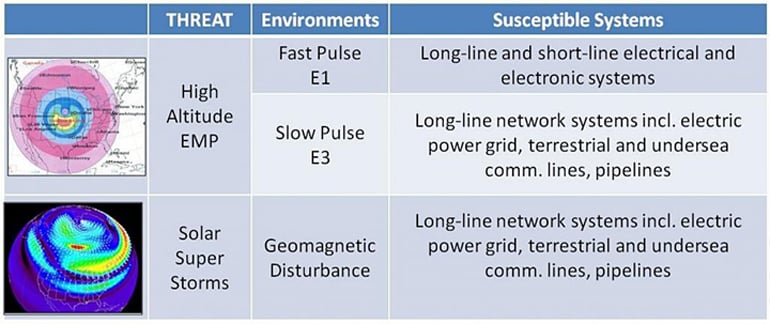
When this energy reaches the ground, it can interact with metal objects, wiring, and electronic equipment. Long conductors like power lines can act like antennas, collecting energy and sending damaging surges into connected systems.
In strong events, the surge may:
- Disrupt electronic devices
- Damage electronic systems
- Trip circuit breakers
- Interfere with communications equipment
- Damage transformers in the electrical grid
Most EMP events do not directly harm people. Instead, the danger comes from the disruption of modern infrastructure.
What causes an EMP?
Several things can produce electromagnetic disturbances, but two causes are considered the most significant.
1. Nuclear EMP
A nuclear EMP occurs when a nuclear weapon detonates high above the Earth. The explosion releases gamma radiation, which interacts with air molecules and Earth’s magnetic field. This interaction creates a powerful burst of electromagnetic energy that spreads across a wide region.
A high altitude detonation is particularly effective because it allows the pulse to affect a very large area. This type of event is often referred to as an EMP attack.
2. Solar EMP (Geomagnetic Storm)
The sun regularly releases bursts of energy called solar flares or coronal mass ejections (CMEs).
When these particles reach Earth, they interact with the planet’s magnetic field and create geomagnetic disturbances.
Unlike nuclear events, solar disturbances usually develop over hours or days. They mainly affect long conductors such as power lines, pipelines, and transmission equipment.
Large solar storms can damage key transformers in the United States electrical grid, potentially causing widespread outages.
What Happens if an EMP Hits?
The effects of an electromagnetic pulse depend on its strength and the systems it interacts with. Most people would notice the event through loss of electricity and communications, rather than the pulse itself. Possible impacts include:
Power Outages
Damage to large transformers or substations could cause major sections of the electrical grid to fail. Without electricity, homes and businesses could lose:
- Lights
- Refrigeration
- Heating or cooling
- Internet service
- Cellular networks
Power outages could last hours, days, or longer depending on the damage severity and area impacted.
Electronic Devices May Fail
Some electronic devices may stop working temporarily or permanently.
Possible failures include:
- Computers
- Cell phones
- TVs and radios
- Appliances
- Generators and inverters
Damage depends on the strength of the event and how well the devices are protected.
Vehicles May Be Affected
Modern vehicles contain complex electronics that control ignition, fuel injection, and safety systems. Some vehicles may stall or fail to start if these systems are damaged. However, research suggests many vehicles would likely survive smaller EMP events. Older vehicles with fewer electronic systems may be less vulnerable.
Infrastructure Disruptions
Large EMP events could affect critical infrastructure, including:
- Communications networks
- Transportation systems
- Fuel distribution
- Banking and payment systems
- Water treatment plants
Because these systems depend heavily on electricity and digital controls, disruptions could spread quickly.
How Long Would Recovery Take?
Recovery depends on the size and scope of the event. Possible recovery timelines include:
- Hours or days for localized disruptions
- Weeks or months for regional damage
- Months or years if major grid components are destroyed
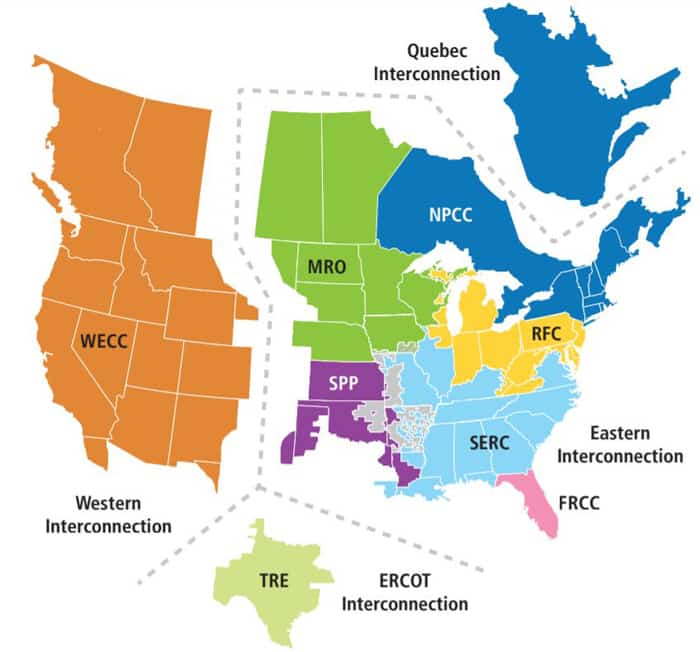
Large transformers used in the electrical grid are complex and difficult to replace quickly. They don’t have many spares. Loss of electricity would also affect water systems, natural gas delivery, and fuel pumps.
The biggest risk is a multi warhead nuclear EMP attack resulting in multiple atmospheric nuclear bursts. Multiple bursts spread out over the USA would likely cripple if not destroy the entire power grid.
Have EMP Events Happened Before?
Yes—though most have been caused by solar activity rather than nuclear weapons.
The Carrington Event (1859)
The largest recorded CME was the 1859 Carrington event. It lasted multiple days and impacted the entire planet. Telegraph lines across the United States sparked, caught fire, and shocked operators. In some cases telegraph equipment continued operating even after power sources were disconnected.
If a storm of similar size occurred today, it could disrupt satellites and damage large portions of the modern power grid.
NOTE: Scientists suspect that in 774AD there was a major flare referred to as the Miyake Event. The estimates are that it was 10x to 14x larger than the Carrington Event. As this cannot be 100% confirmed I list the Carrington as the largest recorded. The measure was based on carbon-14 tracking in trees.
The Quebec Blackout (1989)
A solar storm in 1989 triggered a geomagnetic disturbance that knocked out power to much of Quebec for about nine hours. geomagnetic disturbance that knocked out power to much of Quebec for about nine hours. The event showed how vulnerable modern power grid infrastructure can be to solar activity.
Starfish Prime (1962)
During Cold War testing, the United States detonated a nuclear device high above the Pacific Ocean. The resulting electromagnetic disturbance damaged electrical systems in Hawaii nearly 900 miles away.
Would you like to save this?
We’ll email this post to you, so you can come back to it later!
I agree to be sent email.
What is the difference between Solar and Nuclear EMP?
Both types of events affect systems differently.
Nuclear EMP
- Very intense
- Very short duration
- Primarily damages nearby electronic equipment
With the proliferation of nuclear weapons, the likelihood of a nuclear EMP increases. A nuclear EMP requires a nuclear weapon delivered by a rocket, high flying aircraft or ICBM. The nuke is detonated high in the air (referred to as an “air burst” or atmospheric burst) to create the EMP.
In a worst case scenario, the nuke is detonated in the upper atmosphere, approximately 20 miles up. A large 1 kiloton to 2 kiloton nuclear electromagnetic pulse like this would be very serious. A nation state or rogue state such as North Korea or Iran are the most likely cause of an atmospheric nuclear burst (EMP).
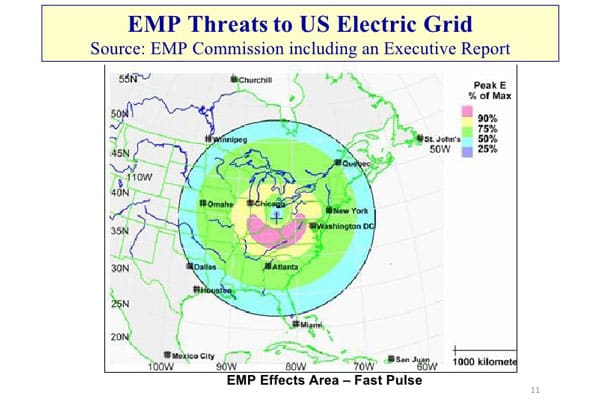
Note: In nuclear weapon tests, the EMP doesn’t expand in simple circles. The earth’s magnetosphere deflects and interacts with the blast, causing the waves to spread more strongly away from the poles and may vary widely.
The pulse is concentrated more strongly in a semi-circular band, as shown in the image above. The earths magnetic field deforms the explosion. The image below gives a rough idea of the interaction between the EMP and the magnetosphere.
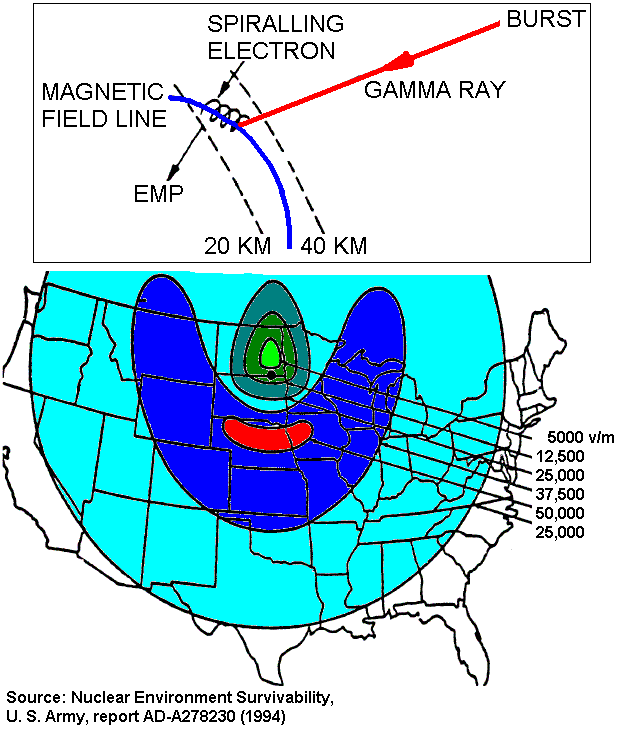
The graphic above is only an estimate – and would vary in the real world based on size of the weapon, altitude it was set to explode at, the atmospheric state, magnetosphere state and other variables.
Recent News
USAF Role in the Electromagnetic Pulse Vulnerability of the United States Critical Infrastructure
US working with 77 radio stations on EMP protection
Could a surface nuclear blast cause an EMP?
A terrorist group would have trouble successfully setting off a high altitude air burst. It is more likely they would likely use a ship and float in a nuke to a major port city.
The lower altitude greatly restricts the range of the EMP damage. Unfortunately the proximity to the ground would increase local physical damage, gamma radiation and fallout.
A dirty bomb would tend to be devastating locally, but would not result in a widespread EMP. See also “Nuclear Radiation Exposure – How to Reduce Your Risks“.
Solar EMP
A solar flare or Coronal Mass Ejection (CME) is created by the sun through normal activity results in a burst of electromagnetic radiation that travels through space. This type of EMP is normally less damaging to electronics but more damaging to the power grid.
You may have noticed our bright displays of northern lights in recent years. This is the mild side of CMEs. In general, solar storms are:
- Lower intensity
- Much longer duration
- Primarily affects long conductors such as power lines
A severe solar storm could potentially affect multiple regions of the planet at once.
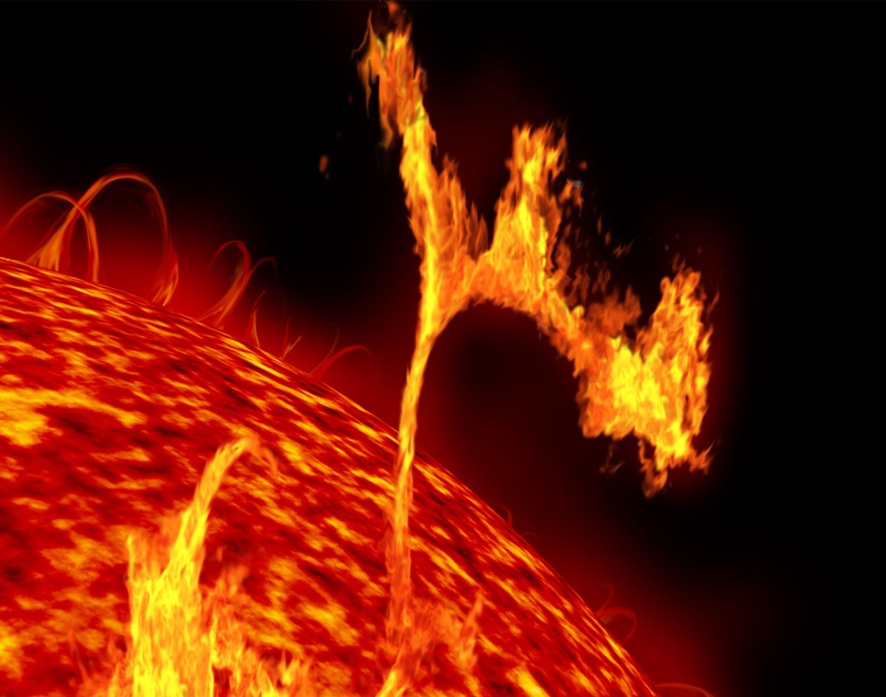
Scientists can detect a coronal mass ejection (CME) and have time to issue a warning. It takes about 5 days for a CME to reach earth.
When a CME hits the earth it creates a geomagnetic storm or EMP on earth, also referred to as a Geo Magnetic Disturbance (GMD). Our magnetosphere protects us from most solar radiation and EMP effects. Although rare, larger solar flares get through the magnetosphere and impact the earths surface. The flares that hit the surface are the biggest theat.
Why is a solar flare dangerous?
A very large, extended Solar Flare EMP could destroy some or all of the high voltage backbone transformers, locally or globally. These transformers are critical to the U.S. electric grid. Even if only a few hundred of the larger transformers were destroyed it would likely disable the entire interconnected system for weeks, months or even years.
Small electronics could survive a solar flare, cell towers could, some cellphones may survive also. The bigger problem is the power grid damage. In general a large long lived solar flare would be far worse than a single nuclear EMP, damaging or destroying satellites and the power grid.
You can get warnings and alerts for known solar flares on your computer or smartphone. Here are some references:
- Apple Solar Alerts App
- Google App Solar Alerts
- NWS Space Weather Alerts, Watches and Warnings
- Flare Aware

How to Prepare for an EMP
Most preparedness experts recommend starting with plans for extended power outages, which are far more common than EMP events.
Basic preparedness steps include:
- Storing food and water
- Keeping battery powered lighting and radios
- Maintaining medical supplies
- Planning cooking and heating options without electricity
Government agencies often recommend at least 72 hours of supplies. Many preparedness planners aim for one week or more. Life happens, so extra preps provide resilience for everything from weather events to job loss.
Protecting Devices from an EMP
Certain precautions can reduce the risk of damage to sensitive electronics. One common method is using a Faraday cage, which blocks electromagnetic energy.
Simple options include:
- Metal containers
- Grounded metal enclosures
- Specialized EMP protection bags
These methods are most useful for protecting small emergency electronics such as radios.
Preparing for Larger Disruptions
A major electromagnetic pulse could cause longer outages. In that case, households may need to rely on:
- Non-electric tools and paper maps
- Wood or propane heating
- Stored food and water
- Independent power sources such as solar generators
Developing practical skills—gardening, food preservation, map reading, and basic repair—can also increase resilience.
See EMP Protection: How to Protect Electronics and Prepare for more details.
The Bottom Line
An electromagnetic pulse EMP—whether caused by a nuclear explosion or solar activity—could disrupt the technology that modern life depends on. However, the same steps that prepare families for storms and blackouts also provide protection against EMP events.
Preparedness is not about predicting the exact crisis. It’s about building systems that keep your household functioning when modern infrastructure fails.
Prepare for challenging times
Transform uncertainty into confidence. Sign up for our free email series to help you prepare for emergencies. Get it Now
We respect your privacy.

Author’s note: I saw power grids transformer explosions like this during the Northridge earthquake. Electricity was Out for a Long time. It’s been decades, but I still remember it clearly.
References
- Report of the Commission to Assess the Threat to the United States from Electromagnetic Pulse Attack
- The State of Preparedness against the Threat of an Electromagnetic Pulse (EMP) Event
- Starfish Prime
Related Articles
- What to Do When the Power Grid Fails (12 Things to Prepare)
- 10 Reasons for Power Grid Failure
- Solar Energy Questions and Answers, Pros and Cons

This post was written by August Neverman IV. August has a strong background in emergency preparedness. He served on several emergency preparedness teams during his tenure at Brown County WI Government, the Medical College of Wisconsin, HSHS, a 13-hospital system and emergency response training during his time with the Air Force and Air National Guard.
Originally published 2013, last updated in 2026.