Happy October 2026 ~ Stop Learning ~ then Start BECOMING or Put All your knowing into Practice.
You are not a human trying to obtain a soul. You are soul presently expressing through a human body
Once that recognition moves from an idea into lived experience, there is your Disclosure. Even the word Starseed can become a comfortable identity. It serves an important purpose when understood it.
This update is at: https://ashtartv.substack.com/p/happy-october-2026-stop-learning
For entertainment purposes only : : Not really ~ this info is more important than Ever! I wish more people would take things like “Being ALIVE or Not, situation because it is” Taking time for: Meditation, Prayers that work, Being Grateful, Going Inside your SELF is Key to Be OK ~ Period ~ but of course it’s all up to You Super girl or Super man & so it is…
via: https://AshtarTv.substack.com
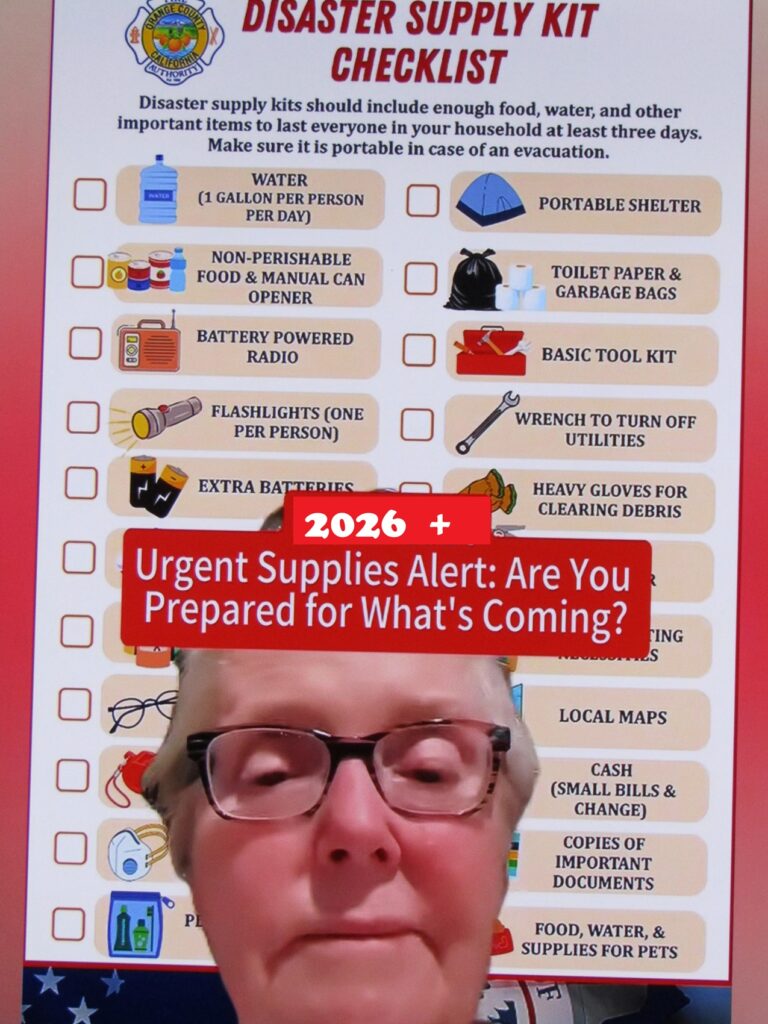
if You wish to take it to the next level upgrade your subscription to a Higher Level + Get an Electric Solution before the Lights Go Out in your area as it’s already happening to more than 1 Million people in the USA between the Midwest flooding & the fires on the Northern West coast, tornadoes in MN, NY. & more. Watch videos, more info & or join Us today at:
Catch this:
Another Hopeful Amazing message from my beloved I AM that I AM : :
I am Ashtar, and we come to be with you at this time because there is something we would like you to do that may at first sound completely opposite to so many of the things that we have shared with you. The Ashtar Command is comprised of a number of Galactic Federation energies and groups that have formed to serve as an alliance to emerging worlds and for other purposes. Although part of humanity will serve to join this federation in time as a more known entity, this is not your purpose, starseeds. Your traits and beauty as the illumined Homo sapien race is to be creative expressions of the One, to use the skills for creating and loving and building, and to take this forward to an advanced version of the Homo sapien race. This is the true expression that we see and was always the original plan for this genome. So, we would like you, for a moment, to forget Disclosure. Forget it completely. Imagine it is not happening. Imagine there are no White Hats. Imagine there are no secret releases being prepared, no hidden technologies waiting to emerge, no announcement coming from your governments, no files that are going to suddenly explain your history, no enormous ship appearing in your skies, no event that will finally cause your family to look at you and say that you were right.
Continue reading below as a supporter or become a supporter today at 50% OFF monthly or yearly options, during OCTOBER 2026 at: https://ashtartv.substack.com/subscribe
Check out previous publications at:
https://ashtartv.substack.com/p/hi-friend-d-happy-september-october
https://ashtartv.substack.com/p/greetings-friend-d-catch-re-admiral
https://ashtartv.substack.com/p/blessings-and-happy-lions-gate-the
https://ashtartv.substack.com/p/breaking-largest-us-power-grid-on
https://ashtartv.substack.com/p/happy-4th-happy-250th-birthday-usawinningworldcu
https://ashtartv.substack.com/p/happy-fathers-day-summer-solstice
https://ashtartv.substack.com/p/hi-dear-i-hope-you-are-doing-well
https://ashtartv.substack.com/p/greetings-friend-d-once-a-conquered
https://ashtartv.substack.com/p/happy-sun-day-dear-friend-3-hold
https://ashtartv.substack.com/p/greetings-dear-friend-and-family-d68
https://ashtartv.substack.com/p/join-me-live-7pm-eastern-time-join
https://ashtartv.substack.com/p/breaking-us-pastors-briefed-to-brace
https://ashtartv.substack.com/p/greetings-and-blessings-dear-friend-a91
https://ashtartv.substack.com/p/happy-resurrection-of-yourself-a
https://ashtartv.substack.com/p/hi-family-aliens-are-real-told-by
https://ashtartv.substack.com/p/ashtar-is-inviting-you-to-a-scheduled
https://ashtartv.substack.com/p/let-intuition-tell-you-where-to-look
https://ashtartv.substack.com/p/consciousness-is-a-field-and-fields
https://ashtartv.substack.com/p/you-are-invited-d-please-join-the
https://ashtartv.substack.com/p/greetings-friend-and-family-d-catch
https://ashtartv.substack.com/p/greetings-dear-friend-and-family-4fc
https://ashtartv.substack.com/p/hi-dear-d-happy-new-year-2026-and
https://ashtartv.substack.com/p/happy-holidays-2025-_-catch-the-perfect
https://ashtartv.substack.com/p/greetings-friend-and-family-3-catch
https://ashtartv.substack.com/p/you-are-invited-to-3iatlasevents
https://ashtartv.substack.com/p/greetings-and-blessings-dear-3-allow
https://ashtartv.substack.com/p/would-you-like-to-be-a-presenting
https://ashtartv.substack.com/p/the-med-bed-video-posted-by-potus
https://ashtartv.substack.com/p/october-and-november-are-the-climax
https://ashtartv.substack.com/p/the-shot-heard-around-the-world-charlies
https://ashtartv.substack.com/p/do-you-know-whats-3iatlas-hint-its
https://ashtartv.substack.com/p/did-you-know-george-soros-and-son
https://ashtartv.substack.com/p/57-or-more-biolabs-in-ukraine-with
https://ashtartv.substack.com/p/greetings-family-d-the-whales-are
https://ashtartv.substack.com/p/greetings-family-d-get-ready-for
https://ashtartv.substack.com/p/humanity-is-not-doomed-nor-alone
https://ashtartv.substack.com/p/hi-family-how-is-your-week-do-you
https://ashtartv.substack.com/p/greetings-family-d-re-the-epstein
https://ashtartv.substack.com/p/greetings-family-d-fyi-our-collective
https://ashtartv.substack.com/p/greetings-family-d-the-77-portal
https://ashtartv.substack.com/p/greetings-dear-family-d-everything
<3
At least 7 US States have been targeted for cyber attacks on water supply. What’s Next?
Check out UPDATES RE: WORLD WAR LEVEL STRIKE WARNING!! = IRAN REJECTS Peace Talks!
Water attack in 7 US States
Including: MN, WI & ?
IRAN / IRGC or similar non peaceful groups Might retaliate back to the US soil according to this Credible Sources Podcast:
UPDATES!! RE: POWER GRID
A father & son’s journey across a desolate post-apocalyptic landscape during a BLACKOUT caused by EMP or something like that….
Post-apocalyptic novel, turned film, focusing on world-building and evidence for the cause of the devastation. The discussion explores themes of fatherly love and survival in a desolate wasteland.
Set in a world destroyed by violence and survival instincts, two sisters are separated in a lawless wasteland. As they battle against ruthless gangs and the brutality of a dying world, their bond becomes their only hope.
A powerful post-apocalyptic action thriller. When the world collapses into chaos, two sisters must fight for survival and find their way back to each other.
Director : Brett Bentman (His 2nd directed movie)
Writer : Brett Bentman
Genre: Action | Drama | Thriller | Post Apocalyptic
Lead Cast: Katie Kohler, Ashlyn McEvers (Bad Kids of Crestview Academy)
Release Year: 2017
Fight For Humanity’s Future | Population Zero | Full HD Sci-Fi Movie – In a dystopian future where global warming has plunged the world into permanent economic collapse, government agents enforce harsh population and resource control. Nicolas Cage stars as one such agent, navigating a fractured society while questioning the morality of the system he serves. As he uncovers dark secrets and faces impossible choices, he must decide whether to follow orders or fight for humanity’s survival.
This Is A Post-Apocalyptic Movie You Must See! The World Fell Into Darkness

The Hopi WARNING That Predicted Everything Happening Now
High in the desert mesas of Arizona, the Hopi people have guarded a timeline of the end of the world for over a thousand years. While many dismiss ancient legends as mere folklore, the Hopi described “iron snakes” crossing the land and “webs in the sky” centuries before modern technology ever existed.
In this video, we deep dive into the Nine Signs of the Hopi Prophecy—eight of which have already come to pass. From the “Gourd of Ashes” to the appearance of the Blue Star Kachina, we explore what the elders call “Koyaanisqatsi” (World out of Balance) and the coming Great Purification.
Is the Blue Star already here? Are we witnessing the final transition into the Fifth World? We look at the evidence the Hopi said would signal the end of our current era and the path they say we must take to survive.
Inside this video:
The Nine Signs: From the arrival of the “white brother” to the final celestial signal.
The Gourd of Ashes: How an ancient prophecy predicted nuclear technology.
The Blue Star Kachina: What happens when the “mask is removed.”
The Two Paths: The Hopi’s specific instructions for the Great Purification.
A’HO!

REQUEST A PRAYER FOR YOU OR A LOVE ONE &/or If You Enjoyed or Benefitted from the info we published. Please consider Supporting Our Good Cause to Help You Understand what’s going on… Please Donate one time or monthly. Just Click on the above image to Donate. Thank You!! xoxo


Bless You! in the mighty name of JESUS CHRIST!! _/|\_
USAF Role in the Electromagnetic Pulse Vulnerability of the United States Critical Infrastructure
The nuclear capabilities of Russia, China, Iran, North Korea, and Violent Extremist Organizations (VEOs) are of substantial concern and are highlighted throughout the 2022 National Defense Strategy of the United States.[1] Along with these nuclear abilities comes the threat to the U.S. Homeland in the form of an Electromagnetic Pulse (EMP) attack. A large enough EMP attack could destabilize significant swaths of the U.S. critical infrastructure services (electricity, telecommunications, water supply, etc.) for anywhere up to months at a time, impacting millions of citizens, jeopardizing governments, and causing untold billions in damage.[2] Various Department of Defense (DoD) services maintain a subset of EMP-hardened mission-critical assets in case of an EMP attack. However, the United States Air Force, including its personnel, installations, assets, and operational infrastructure, are inextricably intertwined with the EMP-vulnerable critical infrastructure of the United States. The USAF and other sister services could see a halt to U.S. military activities domestically and potentially worldwide following a successful EMP attack within the U.S.
In order to address this critical vulnerability, the United States Air Force (USAF), including the Air Force Research Laboratory (AFRL) and sister services research entities, must strongly and urgently partner with the Department of Homeland Security (DHS), academia, and industry (critical infrastructure entities) to promote awareness, refine best practices, and implement resilience to EMP attacks from enemies of the United States.
BACKGROUND
The term electromagnetic pulse (EMP) refers to a wave or field of high energy that is released when there is an intense, high-magnitude burst event at a high altitude that interacts with the Earth’s atmosphere and magnetic fields. High Altitude EMPs (HEMPs) can be caused by both natural and man-made triggers. One naturally triggered example occurred in March of 1989 when a spontaneous massive solar flare sent charged particles toward the earth’s magnetic field. This surge in atmospheric energy caused a reaction that knocked out electricity for the entire power grid of Quebec, Canada, impacting millions. The United States power grid felt the reverberations of this power loss, with hundreds of power issues recorded as well.[3] Another EMP was triggered by man-made weapons in 1962 when the United States detonated a 1.4-megaton bomb above the Johnston Atoll in the Pacific Ocean at an altitude of 250 miles. The blast resulted in an EMP that knocked out radio communications and electricity in Hawaii, including traffic lights.[4]
It was not long before the world would come to grips with the effects of this explosion and the reality of its implication that man-made EMPs could conceivably be weaponized. When a high-altitude nuclear detonation occurs, gamma rays from the explosion cause air molecules to ionize. This reaction produces positive ions and recoil electrons, known as Compton electrons. The result is an extremely powerful electromagnetic field with the ability to damage or destroy electronic devices over a widespread area. The destructive capacity of such a magnetic field could wipe out large swaths of the technology-based critical infrastructure systems in the continental United States, putting millions of lives in danger.
Such an attack on the US mainland would be unique in that, unlike conventional kinetic weapons, an EMP attack would cause no direct physical damage to structures, and there would be no immediate loss of life directly from the detonation itself or the release of energy that followed. Instead, the released energy from the EMP would primarily damage and destroy the electronic devices and equipment that maintain the infrastructure systems on which the U.S. relies. Between direct damage to devices and subsequent inability to regulate infrastructural systems, all services and sectors that rely on electricity, telecommunications, transport, oil/gas, food, medical services, and finance/banking would cease.
To cause a significant amount of impact, an EMP attack on the U.S. would not have to take out every single power station. It would only have to take out a sufficient amount of electrical infrastructure assets in a localized region to destabilize that region and initiate a ripple effect, which would cause the major grids to collapse and fail completely. The United States electrical systems can be viewed as an interconnected web of thousands of plants and stations “holding up the system” and supplying power to various places. If a single station “goes down,” it is possible for other nearby stations to supply the missing power, “carry the extra weight,” and potentially help bring the downed station back “up.” However, if multiple stations were to go down in the same place at the same time, it would become that much more difficult for nearby stations to “carry the extra weight” and help supply the missing power or bring the downed station back “up.” In an extreme case, the “extra weight” that the “downed station” cannot carry could overwhelm the surrounding stations, causing them to “go down” in a ripple effect, ultimately causing the whole web to collapse.
High-altitude nuclear testing during the 1960s demonstrated an increased range of EMP blasts. For example, one 1.4-megaton explosion in 1962 had an estimated EMP blast radius of 800 miles. While such an attack on the United States’ heavily populated coasts would obviously cause significantly more harm than one on the central portion of the country, even an attack on the central states could have secondary effects that coastal states may not be able to withstand.
In a more extreme case, a multi-region attack would be even more devastating since the damaging energy would travel at the speed of light, thereby spreading damage across all impacted regions almost instantaneously. In such a scenario, this could cause a ripple effect scenario in which the major grids fail completely.[5]
Many forms of modern technology would be damaged or destroyed because of the sensitive electronic components that enable them to work. Beyond the obvious electronic devices, such as computers, phones, telecommunications towers, and radios, the prevalence of electrical components would also see the immobilization of a large number of motor vehicles and many other devices that are crucial to modern life. For example, semiconductors are vital components for electronic equipment and are specifically vulnerable to internal heating caused by EMP attacks and are not easily replaced in most modern electronics. Industrial electrical transformers at plants and substations would be at risk of overload and catastrophic failures in an EMP attack. These components are very large, expensive, and difficult to manufacture and transport. This makes it difficult to maintain and properly protect spares in EMP-shielded facilities where they might be needed.
Given the interdependence of the United States’ critical infrastructure, the inability to communicate or power industrial processes would have a devastating compounding effect. Major disruptions to water supplies, food production, food transportation networks, and medical services could directly endanger the US population, as such attacks could severely weaken the country’s economic and military power. Electrical power and telecommunications are also two systems that rely heavily on computer systems to manage them AND whose major components would most likely suffer severe permanent damage from an EMP attack.[6] The means and motive to target the U.S. with some form of significant-scale EMP attack lie most notably with China, Russia, Iran, and North Korea.[7]
Cyber-attacks of sufficient sophistication can mimic some effects of EMP on a comparable scale by rendering various interconnected critical infrastructure systems inoperable. Although this vector of attack is vastly different from EMP, the attackers’ desired result is the same for a much smaller investment of resources. While nuclear EMP attacks incur massive costs due to the various technologies needed, a cyber-attack could theoretically require little more than an internet-connected computer and a sufficiently skilled attacker to have a similar effect.[8]
Of course, these dangers have not gone unnoticed. The 2019 Presidential Executive Order on Coordinating National Resilience to Electromagnetic Pulses has identified and empowered chief stakeholders in the challenge of U.S. EMP resilience, such as the Departments of Homeland Security (DHS), Energy (DoE), and Defense (DoD). Charged with spearheading the protection of U.S. critical infrastructure, DHS has recognized the need for unified research for risk assessments that support preparing the civilian sector.[9] Therefore, the United States Air Force (USAF) and Air Force Research Laboratory (AFRL) should work with DoD sister services and their respective research laboratories in strong partnership with DHS, academia, and industry to work toward critical infrastructure resilience to enemy EMP attacks. While the DHS does not have direct authority to mandate the action of private sector infrastructure service providers, it can create and disseminate guidance to influence their operations.
Similar to the Energy Star program of the Environmental Protection Agency and Department of Energy, DHS could implement a program of recognition to incentivize providers to comply with various EMP resilience awareness, training, and best practices.[10] I propose that the DHS adopt the designation “EMPowerED”. While not an endorsement by any government entity, this program could be used as a way to distinguish the company as EMP-resilient. The term “EMPowerED” reflects multiple facets of the program:
- “EMP” refers to the ElectroMagnetic Pulse as the titular subject matter of the program.
- “Power” refers not just to the energy, but the strength and resilience required to meet the challenge of acting in the best interest of the population who rely on the services provided by the organization.
- “ED” refers to the educational aspect of the undertaking: sharing awareness, knowledge, and best practices.
Altogether, “EMPowerED” reminds those involved that they are granted the ability and means to help steer toward a safer, better future by capitalizing on the opportunities of the present. While an initial designation can indicate that a certain percentage of employees have completed EMP resilience awareness training, companies could obtain an additional designation for hosting similar awareness and training workshops for their customers. Finally, a company can earn the highest distinction for implementing EMP resilience best practices within their own business infrastructure, such as housing critical components and or backup equipment in EMP-hardened facilities, completing table-top exercises (akin to Dungeons and Dragons) or real-world exercises based on a simulated EMP attack.
Despite all of the capabilities of military and civilian personnel within the DoD, the US military and its installations depend on private infrastructure to operate. Even mission-critical assets cannot maintain independent functionality indefinitely, so EMP awareness and resilience training should be rolled out DoD-wide. Furthermore, as the force most likely mobilized in the event of an EMP attack, special attention should be paid to the National Guard. This would require their personnel to be preemptively trained on how to respond.
A diversified approach to EMP resilience means that the civilian sector will also play an important role. Civilian research institutions represent a vast multi-disciplinary pool of talent that could be useful in solving problems associated with EMP resilience, especially if there was government funding to support their research. Industry also plays a key role as the chief operational stakeholder and the principal custodian of the assets for which the battle of EMP resilience is set to be fought. Therefore, cooperation with industry will be key for any effort in EMP resilience to be successful. However, their diversity of operations and interdependence will pose some challenges. Furthermore, elected officials from local to state levels can use their influence to communicate and incentivize earnest participation of industry.
Collaboration between these organizations can potentially yield some interesting results.
The DHS and DoD research labs could help develop better ways for training military forces in the practical implementations of EMP resilience. A partnership between DHS and private industry can facilitate meaningful dialogue to identify common ground on priorities, boundaries, and desired outcomes. DHS can take the lead by developing a comprehensive framework of tangible and measurable EMP resilience-related key performance indicators (RKPIs) tailored to each sector of the industry. These RKPIs are then prioritized and shared with the respective industry representatives. Industry representatives must be encouraged to share their limitations in a frank and open dialogue with DHS so any necessary revisions for the RKPIs can be approved. Gaps between industry limitations and the DHS RKPI could provide an opportunity for further research or testing, either unilaterally or in partnership between DoD Research Labs and civilian research institutions. The findings derived from these research and testing endeavors will serve as a basis for informing training protocols and identifying best practices for both the DoD and private industry. Consequently, the DoD and private industry will be able to provide feedback on the effectiveness of the research findings on a larger scale.
The conversation about electromagnetic pulse attacks must happen now as their effects make reactive approaches not only impractical, if not impossible but also dangerously irresponsible. Continual dialog between DHS and other research partners is crucial to providing relevant preparation and mitigation guidance. While immediately educating the force will help ensure sustainment if the US is attacked by such a weapon, greater efforts will be needed to create the EMP resilience necessary. Adaptive resilience can be achieved through continual feedback of research, communication, and training. Not only will these relationships enhance the interconnectedness between the entities involved, but its will also mitigate the susceptibility of critical assets within the United States. This is particularly crucial in an era where the nature of warfare has shifted away from conventional battlegrounds and civilians find themselves in closer proximity to potential threats than ever before.
Capt. Ronald McKinney Jr.
Capt. McKinney currently serves in the Texas Air National Guard as Flight Commander for Special Missions under the 221st Combat Communications Squadron at Hensley Field, Texas. In addition to ISC2 CISSP, CompTIA Sec+, Cisco CCNA, and DevNET Associate certs, he holds a Bachelor of Science in Computer Science (University of Texas at San Antonio, 2017), a Master of Science in Nutrition (Baylor University, 2012), a Bachelor of Science in Culinary Nutrition (Johnson & Wales University, 2007), and an Associate of Science in Culinary Arts (Johnson & Wales University, 2005). He previously served Active Duty as a Dietitian at Joint Base San Antonio. On the civilian side, he works as a Duty Manager in I.T., serves as Chief Operations Officer for a local cookie business, and owns a holding company.
This article is based on work conducted in Squadron Officer School’s AU Advanced Research (AUAR) elective.
NOTES
[1.] Secretary of Defense, National Defense Strategy of the United States of America (Washington, DC: Secretary of Defense, 2022), https://media.defense.gov/2022/Oct/27/2003103845/-1/-1/1/2022-NATIONAL-DEFENSE-STRATEGY-NPR-MDR.PDF.
[2.] Washington State Department of Health, “Electromagnetic Pulse Fact Sheet 320-090”, 2003, 3 https://doh.wa.gov/sites/default/files/legacy/Documents/Pubs/320-090_elecpuls_fs.pdf; Commission to Assess the Threat to the United States from Electromagnetic Pulse (EMP) Attack, Report of the Commission to Assess the Threat to the United States from Electromagnetic Pulse (EMP), Vol. 1: Executive Report (Washington D.C: Commission to Assess the Threat to the United States from Electromagnetic Pulse (EMP) Attack, 2004), http://www.empcommission.org/docs/empc_exec_rpt.pdf .
[3.] Sten Odenwald, “The Day the Sun Brought Darkness”, Phys.org, March 31, 2009, https://phys.org/news/2009-03-day-sun-brought-darkness-wvideo.html.
[4.] Brian Gutierrez, “Why the U.S. Once Set Off a Nuclear Bomb in Space”, National Geographic, July 16, 2021, https://www.nationalgeographic.com/science/article/why-the-us-once-set-off-a-nuclear-bomb-in-space-called-starfish-prime; Charles N. Vittitoe, Did High-Altitude EMP Cause the Hawaiian Streetlight Incident? (Albuquerque N.M. Oak Ridge Tenn: Sandia National Laboratories, 1989), http://ece-research.unm.edu/summa/notes/SDAN/0031.pdf; Gilbert King, “Going Nuclear Over the Pacific”, Smithsonian Magazine, August, 15, 2012, https://www.smithsonianmag.com/history/going-nuclear-over-the-pacific-24428997/.
[5.] Washington State Dept. of Health, “Electromagnetic Pulse Fact Sheet 320-090”, 2003, 3.
[6.] Washington State Dept. of Health, “Electromagnetic Pulse Fact Sheet 320-090”, 2003, 3; Maj David Stuckenberg, R. James Woolsey, Douglas DeMaio, “Electromagnetic Defense Task Force 2.0 2019 Report” (Maxwell Air Force Base Alabama: Air University Press Curtis, 2019), https://www.airuniversity.af.edu/Portals/10/AUPress/Papers/LP_0004_ELECTROMAGNETIC_DEFENSE_TASK_FORCE_2_2019.PDF.
[7.] Secretary of Defense, 2022 National Defense Strategy, III.
[8.] Thomas Scanlon, Andrew Boyle, Shawn Harris, Brandon Dunlap, “SolarWinds Fallout Has Execs Asking: How Secure is Our Supply Chain?,” BrightTALK, March 30, 2021, https://www.brighttalk.com/webcast/13159/473104.
[9.] “Executive Order 13865 of March 26, 2019, Coordinating National Resilience to Electromagnetic Pulses” Federal Register, 84, no. 61 (March 29, 2019): 12041-12046, https://www.federalregister.gov/documents/2019/03/29/2019-06325/coordinating-national-resilience-to-electromagnetic-pulses; U.S. Department of Homeland Security, Strategy for Protecting and Preparing the Homeland Against Threats of Electromagnetic Pulse and Geomagnetic Disturbances (Washington, DC: Department of Homeland Security, 2018), https://www.dhs.gov/sites/default/files/publications/18_1009_EMP_GMD_Strategy-Non-Embargoed.pdf.
[10.] Stuckenberg, Woolsey, DeMaio, “Electromagnetic Defense Task Force 2.0 2019 Report.”
- Published Feb. 22, 2024
- By Capt. Ronald McKinney Jr.
Wild Blue Yonder, MAXWELL AIR FORCE BASE, Ala. —
__________________________________________________________________________________________________________________________________________
Starfish Prime: The Largest Nuclear Test in Space
By
Dr. Helmenstine holds a Ph.D. in biomedical sciences and is a science writer, educator, and consultant. She has taught science courses at the high school, college, and graduate levels.
Updated on June 2, 2019
10 Astonishing Facts About House FliesClose
:max_bytes(150000):strip_icc():format(webp)/the-north-shore-687846160-59c12e1f845b3400111e2f9e.jpg)
Starfish Prime was a high-altitude nuclear test conducted on July 9, 1962 as part of a group of tests collectively known as Operation Fishbowl. While Starfish Prime was not the first high-altitude test, it was the largest nuclear test ever conducted by the United States in space. The test led to the discovery and understanding of the nuclear electromagnetic pulse (EMP) effect and a mapping of seasonal mixing rates of tropical and polar air masses.
- Starfish Prime was a high-altitude nuclear test conducted by the United States on July 9, 1962. It was part of Operation Fishbowl.
- It was the largest nuclear test conducted in outer space, with a yield of 1.4 megatons.
- Starfish Prime generated an electromagnetic pulse (EMP) that damaged electrical systems in Hawaii, just under 900 miles away.
History of the Starfish Prime Test
Operation Fishbowl was a series of tests conducted by the United States Atomic Energy Commission (AEC) and Defense Atomic Support Agency in response to the August 30, 1961 announcement that Soviet Russia intended to end its three-year moratorium on testing. The United States had conducted six high-altitude nuclear tests in 1958, but the results of the test raised more questions than they answered.
Starfish was one of five planned Fishbowl tests. An aborted Starfish launch occurred on June 20. The Thor launch vehicle began to break apart about a minute after launch. When the range safety officer ordered its destruction, the missile was between 30,000 and 35,000 feet (9.1 to 10.7 kilometers) of altitude. Debris from the missile and radioactive contamination from the warhead fell into the Pacific Ocean and Johnston Atoll, a wildlife refuge and airbase used for multiple nuclear tests. In essence, the failed test became a dirty bomb. Similar failures with Bluegill, Bluegill Prime, and Bluegill Double Prime of Operation Fishbowl contaminated the island and its surroundings with plutonium and americium that remain to the present day.
The Starfish Prime test consisted of a Thor rocket bearing a W49 thermonuclear warhead and Mk. 2 reentry vehicle. The missile launched from Johnston Island, which is located about 900 miles (1450 kilometers) from Hawaii. The nuclear explosion occurred at a height of 250 miles (400 kilometers) above a point about 20 miles southwest of Hawaii. The warhead yield was 1.4 megatons, which coincided with the designed yield of 1.4 to 1.45 megatons.
The location of the explosion placed it about 10° above the horizon viewed from Hawaii at 11 pm Hawaii time. From Honolulu, the explosion appeared much like a bright orange-red sunset. Following the detonation, bright red and yellow-white auroras were observed in the area for several minutes surrounding the explosion site and also on the opposite side of the equator from it.
Observers at Johnston saw a white flash upon detonation, but did not report hearing any sound associated with the explosion. The nuclear electromagnetic pulse from the explosion caused electrical damage in Hawaii, taking out the telephone company microwave link and knocking out street lights. Electronics in New Zealand were also damaged, 1300 kilometers from the event.
Atmospheric Tests Versus Space Tests
The altitude achieved by Starfish Prime made it a space test. Nuclear explosions in space form a spherical cloud, cross hemispheres to produce auroral displays, generate persistent artificial radiation belts, and produce an EMP capable of disrupting sensitive equipment along line-of-sight of the event. Atmospheric nuclear explosions may also be called high-altitude tests, yet they have a different appearance (mushroom clouds) and cause different effects.
After Effects and Scientific Discoveries
The beta particles produced by Starfish Prime lit up the sky, while energetic electrons formed artificial radiation belts around the Earth. In the months following the test, radiation damage from the belts disabled a third of the satellites in low Earth orbit. A 1968 study found remains of the Starfish electrons five years after the test.
A cadmium-109 tracer was included with the Starfish payload. Tracking the tracer helped scientists understand the rate at which polar and tropical air masses mix during different seasons.
Analysis of the EMP produced by Starfish Prime has led to a better understanding of the effect and the risks it poses to modern systems. Had Starfish Prime been detonated over the continental United States instead of the Pacific Ocean, the effects of the EMP would have been more pronounced because of the stronger magnetic field at the higher latitude. Were a nuclear device to be exploded in space over the middle of a continent, the damage from the EMP could affect the entire continent. While disruption in Hawaii in 1962 was minor, modern electronic devices are much more sensitive to electromagnetic pulses. A modern EMP from a space nuclear explosion poses a significant risk to modern infrastructure and to satellites and space craft in low Earth orbit.
Sources
- Barnes, P.R., et al, (1993). Electromagnetic Pulse Research on Electric Power Systems: Program Summary and Recommendations, Oak Ridge National Laboratory report ORNL-6708.
- Brown, W.L.; J.D. Gabbe (March 1963). “The Electron Distribution in the Earth’s Radiation Belts during July 1962 As Measured by Telstar”. Journal of Geophysical Research. 68 (3): 607–618.